01 / Inputs
Capture load, speed, size, surface and interface boundaries.
Wheel Lab
Materials, simulation, testing and sensor interfaces brought into a documented development path.
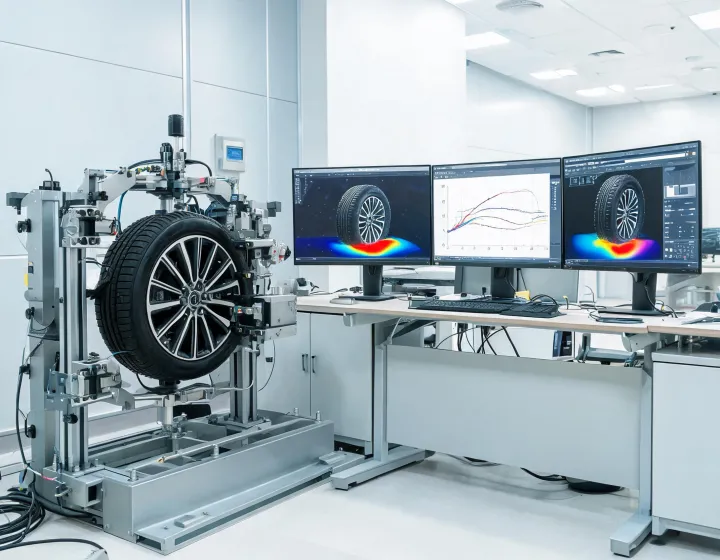
Every program begins with a defined operating envelope. These stages describe a useful framework for discussion; the actual scope depends on the vehicle, product and agreement.
Capture load, speed, size, surface and interface boundaries.
Use assumptions and material inputs appropriate to the question being studied.
Define rig or road conditions, sample selection and acceptance criteria.
Compare measurements with the brief and document unresolved questions.
Compound and carcass choices influence multiple characteristics. Compare candidates under the same stated operating conditions before drawing conclusions.
Input: duty cycleA model is useful when its assumptions, boundary conditions and relationship to physical measurements are understood by the team.
Input: model scopeWheel-end sensing requires attention to interface, environment and data interpretation. Define the specific platform and operating requirements first.
Input: interfaceA development review can involve several disciplines. Their roles and deliverables should be agreed for each project, with any third-party participation confirmed separately.
Provides platform boundaries and operating requirements.
Defines methods, instrumentation and reporting.
Coordinates decisions, timing and documented changes.
Share the platform, requirements and evidence you need to evaluate.